
Brussels, 23 September 2025
The European childhood cancer community has put the spotlight on childhood cancer once again during Gold September – Childhood Cancer Awareness Month with our flagship policy event.
The event, held on 23 September at the European Parliament in Brussels, has been kindly co-hosted and co-organised by MEP Vlad Voiculescu (RE, Romania) and MEP Romana Jerkovic (S&D, Croatia) with the participation of SIOP Europe and CCI Europe.
The goal was to explore how the implementation of Europe’s Beating Cancer Plan and the EU Cancer Mission has addressed the needs of children with cancer so far and which key priorities must be upheld in the upcoming EU long-term budget (MFF 2028–2034).
What’s at Stake
Cancer remains the leading cause of disease-related death in children over one year old in Europe, with 35,000 new diagnoses and 6,000 deaths annually. The next MFF presents a crucial opportunity to bridge survival gaps between countries, expand access to care and research, and invest in cutting-edge innovation for young patients and survivors.
Prioritising childhood cancer in the next EU budget
The policy discussion has aimed to explore how current EU programmes, including Europe’s Beating Cancer Plan, the EU Cancer Mission, and funding tools such as EU4Health and Horizon Europe, have helped advance paediatric cancer care, research, and survivorship. With the next EU long-term budget under negotiation, stakeholders highlighted the importance of continued investment in paediatric oncology to ensure equal care opportunities and research innovation across Europe.
The event recognized and highlighted the instrumental role of EU support in enabling substantial progress in childhood cancer care and research. It also pinpointed remaining gap areas, such as access to innovation and sustainable support to cross-border networks and integrated care and research infrastructures in paediatric oncology.
Key voices at the event
The event featured a distinguished lineup of speakers in a moderated two-panel discussion including representatives from the European Commission (DG SANTE, DG RTD, and DG BUDG), MEPs, representatives from Permanent Representations of Member States (Spain), and experts from the European paediatric cancer community including patients and academia.
The first panel, titled “Europe’s Beating Cancer Plan & Cancer Mission: Successes and Gaps”, has focused on achievements and implementation challenges of current EU cancer initiatives for children and adolescents.
The second panel, titled “The Next MFF: How to Make Childhood Cancer a Priority”, has examined how the next EU budget should have dedicated funding for childhood cancer to strengthen infrastructures, support innovation, and reduce inequalities in paediatric oncology across Europe.
SIOPE President Prof. Uta Dirksen stated:
“… Persistent inequalities in childhood cancer care and survival across the EU demand urgent attention. By accelerating access to care, boosting research and innovation, and supporting the exchange of specialist expertise, we can begin to close the gaps and better serve the needs of children with cancer. The EU has a vital responsibility to build on the success of cross-border collaboration and ensure the health needs of vulnerable populations, including children with cancer, are fully integrated into its competitiveness agenda.”
CCI-E Chair Anita Kienesberger stated:
“Childhood cancer knows no borders — and neither should our response. Every child has the right to access comprehensive care - from diagnosis to treatment, psychosocial and palliative care, and survivorship care. The challenges we face in childhood cancer are challenges that no single country can face alone. This fact was acknowledged by the EU in the last MFF, when Childhood Cancer was put in the spotlight. This facilitated great progress, but we have not reached our goal: that in Europe no child affected by cancer is left behind. Therefore, we need the continued support of the EU: to unite efforts, close gaps between and beyond borders, and support patient organisations and professional societies to implement real change. The Next Multiannual Financial Framework 2028–2034 must reflect these priorities — because no child should be left behind, no matter where they live."
The discussion has emphasised how prioritising childhood cancer is not only a moral imperative, but also an investment in the EU’s long-term competitiveness, health resilience, and world-wide scientific leadership. SIOP Europe and CCI Europe call on EU institutions to ensure that no child with cancer is left behind.
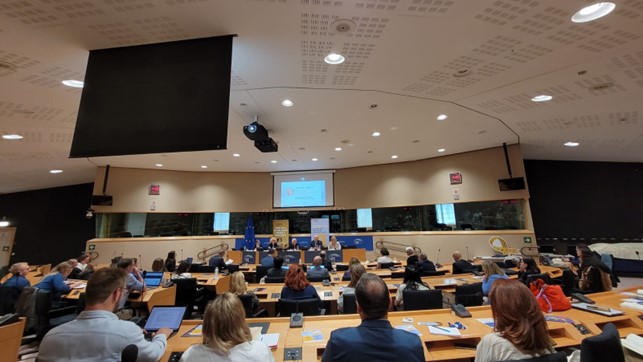
European Parliament, 23 September 2025
ABOUT CCI Europe and SIOP Europe

Childhood Cancer International - Europe (CCI-E, or CCI Europe) represents childhood cancer parent and survivor groups as well as other childhood cancer organisations in Europe: 67 organisations in 34 European countries are members of CCI-E. CCI Europe works together with all relevant stakeholders for the same goal: help children and adolescents with cancer to be cured, with no - or as few as possible - long term health problems/late effects (www.ccieurope.eu).

The European Society for Paediatric Oncology (SIOPE, or SIOP Europe) is the single united European organisation representing all professionals working in the field of childhood cancers. With more than 2,700 members across 36 countries, SIOP Europe is leading the way to ensure the best possible care and outcomes for all children and adolescents with cancer in Europe (www.siope.eu).